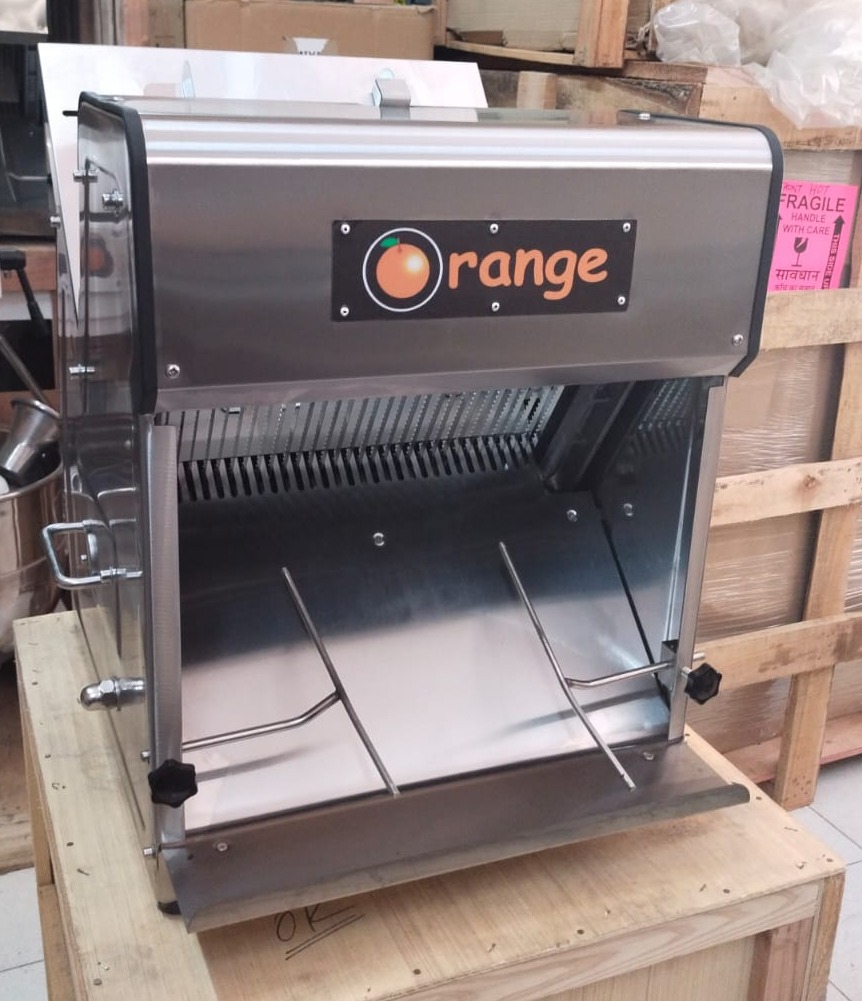
A commercial bread slicer is designed to efficiently and uniformly slice loaves of bread in bakery settings. Here are the key features to look for when evaluating or purchasing one:
🔧 1. Slice Thickness Adjustment
-
Fixed or Adjustable Blades: Some slicers have fixed thickness (e.g., 10mm, 12mm), while others allow you to adjust the thickness as needed.
-
Useful for customizing slices for different products like sandwich loaves, toast, or specialty breads.
⚙️ 2. Motor Power and Speed
-
Motor Ratings: Typically range from 0.25 HP to 1 HP.
-
Slicing Speed: Determines how quickly the machine can slice a loaf—important for high-output bakeries.
-
Higher-powered machines can handle denser or crustier breads without jamming.
🥖 3. Bread Capacity
-
Single or Multiple Loaves: Most models handle one loaf at a time; larger or industrial slicers can handle multiple.
-
Max Loaf Size: Machines list max length, width, and height—important for specialty or artisan breads.
🔪 4. Blade Type and Count
-
Material: Typically stainless steel for hygiene and durability.
-
Quantity: More blades = faster and more uniform slicing.
-
Some machines allow easy blade replacement, which reduces downtime.
🧼 5. Hygiene & Cleaning Features
-
Removable Crumb Tray: Collects debris for easy cleanup.
-
Food-Grade Materials: Stainless steel body is standard for food safety and longevity.
-
Easy access for internal cleaning is a bonus.
🔒 6. Safety Features
-
Safety Guards & Covers: Prevent hand injuries.
-
Auto Shutoff: Stops slicing when the top lid is opened.
-
Non-slip Feet or Base: Stabilizes the unit during operation.
⚡ 7. Power Supply
-
Usually requires a 220V or 240V single-phase or three-phase power connection.
-
Commercial slicers consume more power, so proper wiring is necessary.
🖥️ 8. Control Interface
-
Manual (Push Start) or Digital Controls (for programmable slicing).
-
Advanced models may offer a touchscreen interface or pre-set slicing modes.
📦 9. Build & Design
-
Stainless Steel Housing: Rust-resistant, durable, professional look.
-
Compact Footprint: Important for smaller bakery spaces.
-
Noise Level: Some slicers are quieter, which is preferable in front-of-house settings.
🚚 10. Portability & Installation
-
Weight & Wheels: Some large slicers come on lockable wheels for easier movement.
-
Installation Requirements: Often need sturdy countertops or tables; large machines might require bolting.