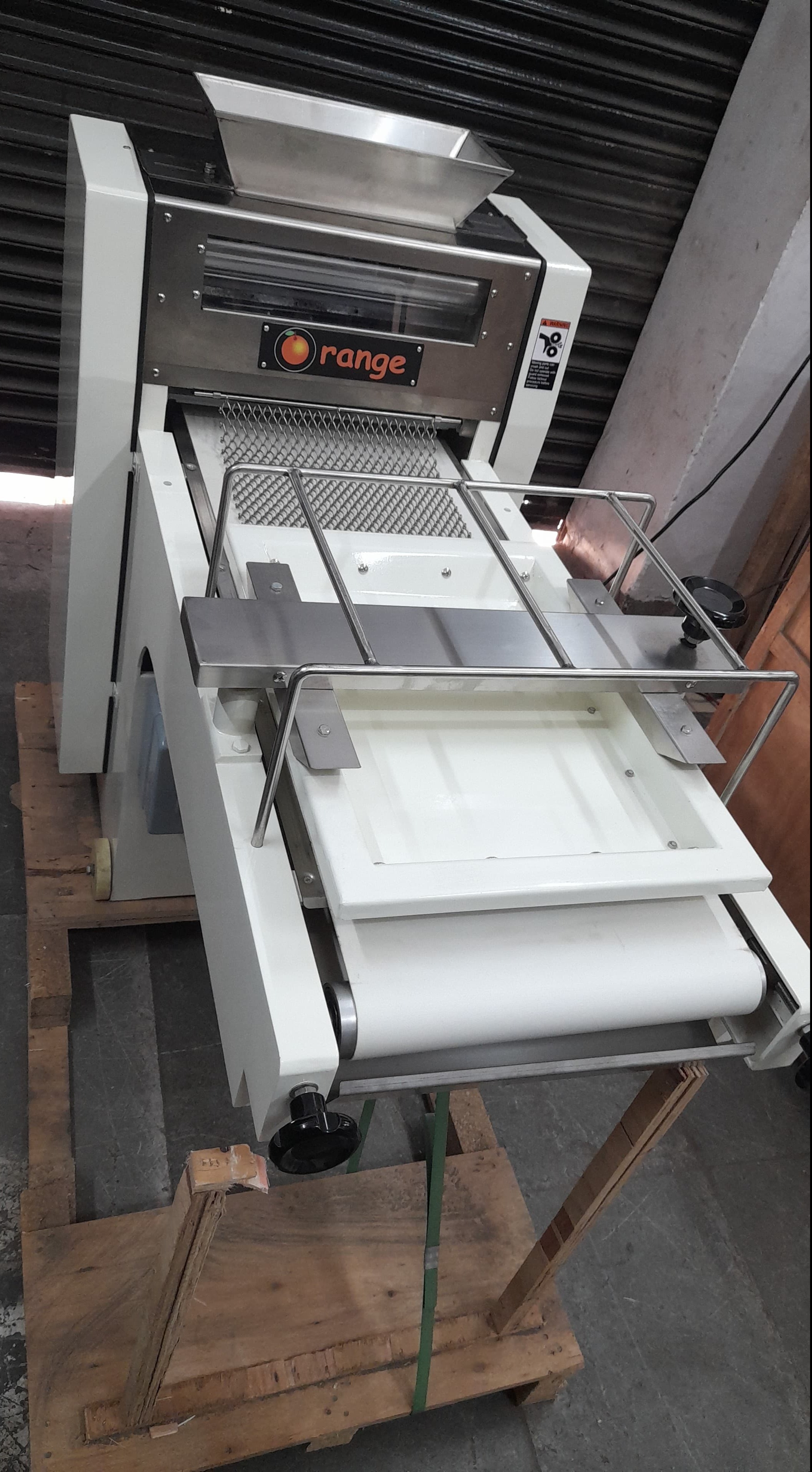
Dough Moulder / Moulding Machine Manufacturers in Bengluru
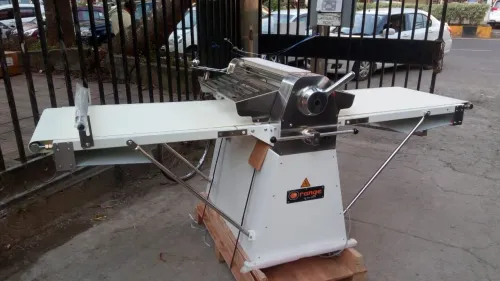
A dough moulder is a piece of bakery equipment used to shape and form dough into uniform pieces, usually before the final proofing and baking stages. It is especially important in the production of bread, rolls, and other yeast-leavened products where consistent size, shape, and structure are desired.
🛠️ How a Dough Moulder Works
A typical dough moulder performs three main actions:
Sheeting: The dough is gently compressed into a flat sheet to remove large air bubbles.
Rolling: The sheeted dough is then rolled into a cylindrical shape.
Moulding: The dough is shaped and elongated to the required size and form (e.g., baguette, sandwich loaf, etc.).
🔧 Main Components
Infeed belt: Where dough pieces are placed.
Sheeting rollers: Compress the dough.
Curling chain or belt: Rolls the dough into a cylinder.
Moulding board or pressure plate: Shapes and elongates the dough.
Outfeed conveyor: Delivers the moulded dough.
✅ Benefits
Uniform dough shape and size.
Reduced manual labor.
Consistent final product quality.
Faster production for bakeries.
# Dough Roller
# Dough Former
# Bread Moulder
# Loaf Moulder
# Roll Moulder
# Dough Processing Machine
For more details :
Contact us - 9619850666 / 9136116057
M/s. Orange Multi Ventures
29, Kukreja Plaza, Below K-Star Hotel, Sector-11,
Near CBD Railway Station, Belapur-400614, Navi Mumbai
Website:- www.orangemultiventures.in
Email:- info@orangemultiventures.in